
Why was the New Machine Shop built?
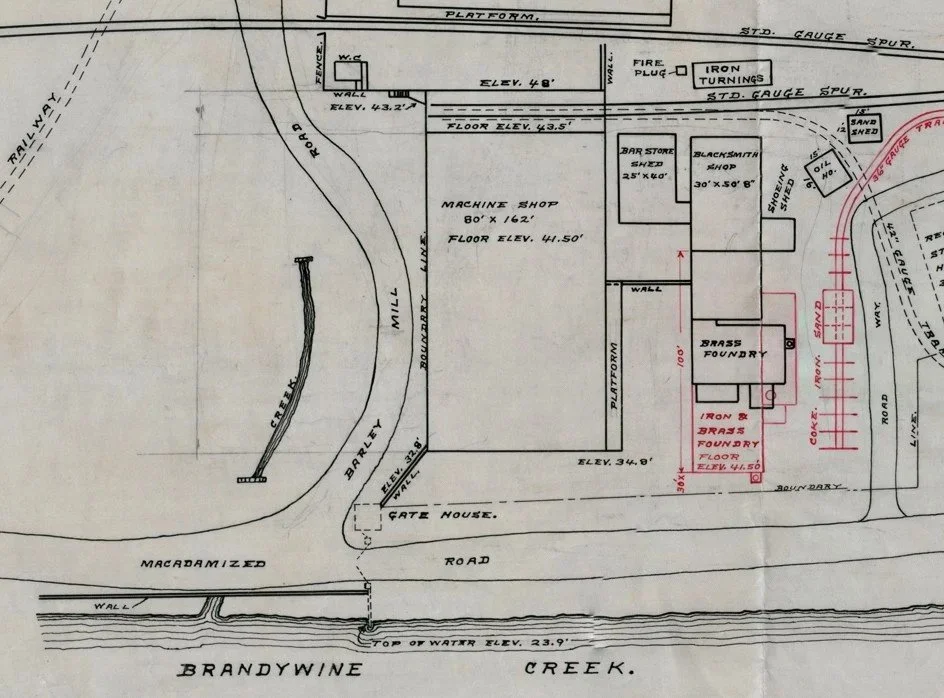
“The ‘machine shop’ aspect of the [Hagley Yard] facility became more important as the [DuPont] company increasingly replaced wooden mill components with iron ones. Powder-making machinery—the things inside the mill structures—moved toward all-metal construction as the [19th] century proceeded, thus placing increased demands on the machine shop. The millwright of the early part of the century gave way to or became the machinist and mechanic of the late 19th century.
By the turn of the century this momentum led the company to build a much bigger machine shop [New Machine Shop] a short distance downstream from the Keg Mill and to equip the shop with additional and larger machine tools than those brought from the old machine shop. There is little doubt that this new facility was capable of producing—and indeed did produce—most if not all the machinery required for the Brandywine powder works and associated works, such as the Carney's Point facility for smokeless powder. Company executives in this century wanted to see the new Brandywine Shops used to their maximum potential. This desire resulted in 1913 in the machine work at the Repauno high explosives plant being moved to the Brandywine Shops. From 1913 until World War I this combined facility supplied machinery and special appliances for both the High Explosives and Black Powder Departments of the Du Pont Company.”
- The 1858 Millwright and Machine Shop at Hagley. Hinsley, Jacqueline A., Hounshell, David A. and Kaufmann, Joy. Eleutherian Mills-Hagley Foundation research reports (Accession 1645). 1980. MS1645_165. Box 06, Folder 165, Manuscripts and Archives, Hagley Museum and Library, Wilmington, DE 19807. Accessed 2026-01-13; https://digital.hagley.org/MS1645_165.